Proof of Vaccination at the Border
Officers accept a stamped certificate, not a portal login or a phone screen. How to check each country's entry rule and which two files to carry.
Published · Updated
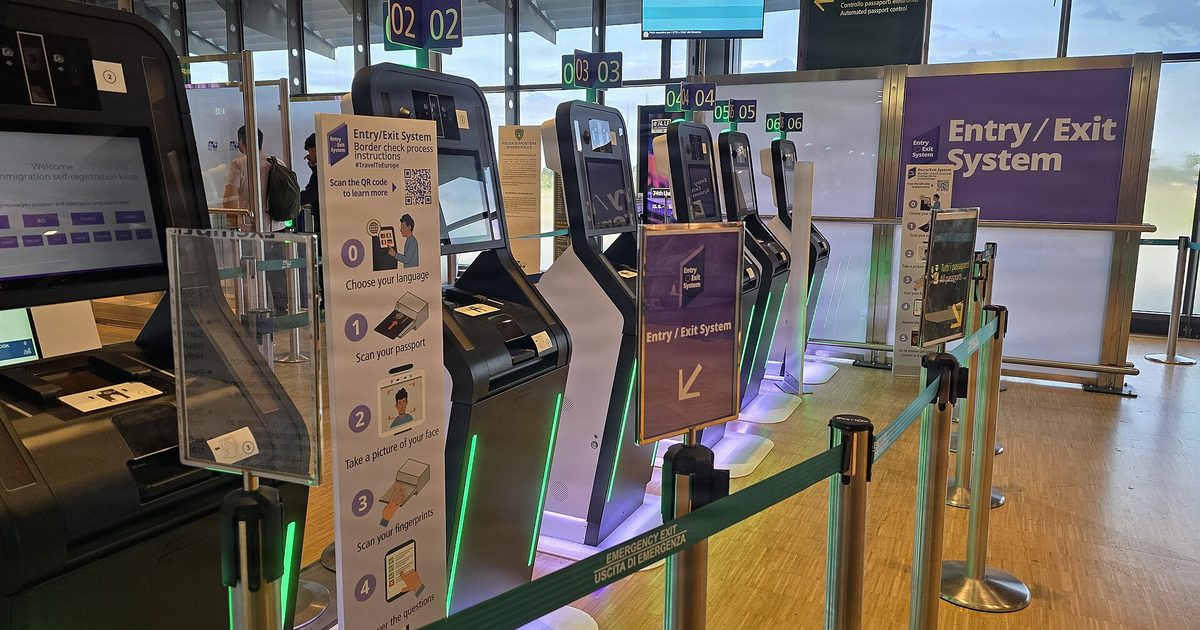
When a border asks for proof of vaccination for travel, it is asking for a specific paper document issued by an authorized center, not for access to a patient portal. The rule behind that request belongs to the destination government: under the WHO International Health Regulations (2005) each State Party sets its own entry requirements, and Annex 7 designates exactly one disease — yellow fever — for which "proof of vaccination or prophylaxis may be required for travellers as a condition of entry."
A home record can be complete, accurate and beautifully organized and still be the wrong object at that desk.
What counts as proof of vaccination at a border?
A completed International Certificate of Vaccination or Prophylaxis, in the traveler's own name, issued and signed by an authorized vaccination center — or, where the country allows one, a documented medical exemption it agrees to accept. That is the short list. What has to be on the certificate and what spoils it are covered in the yellow card decoded, and the mechanics of who needs one for which route sit in yellow fever entry rules.
Everything else you carry is for a different audience: a clinic abroad, a ship's infirmary, a pediatric office when you get home, a school form in August.
What are officers generally not looking for?
Not the artifacts a U.S. family reaches for first. The following are useful documents, and none of them is a border certificate:
| What families bring | What it is actually good for |
|---|---|
| A photo of a handwritten shot card | Reminding a clinic what was given, and when |
| A state immunization registry printout | School, camp and daycare paperwork |
| A patient-portal screen or QR code | Checking dates on your own phone |
| An insurance card | Billing, not entry |
None of that is a criticism of the paperwork. It is a statement about which rule each document was written to satisfy. Officers are not evaluating whether a family is well organized; they are checking one document against one line in their own country's regulations.
Can a transit country create a requirement?
Yes, and this is where families are most often surprised. Requirements are frequently written around where a traveler has been in the days before arrival, not only where they are going. The CDC destination page for India, for example, requires proof of yellow fever vaccination from travelers aged ≥9 months arriving within 6 days of leaving an area with risk for yellow fever virus transmission, including those who transited through such an area.
Read the ticket the way an officer will: every country you will enter, in order, plus every country attached to a connection. Cruise itineraries and land crossings work the same way — the question is the route, not the brochure.
Two consequences follow. The first is that a cheaper fare with an extra connection can change the paperwork, and it is worth pricing that connection with the clinic visit included. The second is that timing matters: a certificate for yellow fever becomes valid 10 days after the date of vaccination under Annex 7 of the International Health Regulations, so a route discovered a week before departure may not be fixable in time.
How do you check each country's official entry rule?
Treat it as a short ritual with a fixed order, done twice:
- List every country on the itinerary, including connections and any port or land crossing.
- Open each one on the CDC Travelers' Health destination list, which covers more than 200 destinations.
- Read the recommendation lines and the entry-requirement lines separately. They answer different questions and can disagree.
- Where the wording is unclear, go to that country's own immigration or health-ministry page, or its embassy. CDC Travelers' Health is the U.S. starting point; it does not write foreign entry rules.
- Repeat the whole check in the week before departure.
Fail closed. If you cannot verify a rule from an official source, you do not have the rule — you have a rumor with a plausible tone. That applies to airline emails, forum posts and any country list published in an article, this one included.
Why do you need two separate files, not one?
Because two different institutions are asking two different questions, and no single document answers both.
The family record is for you and for clinicians: who had which routine dose, when the hepatitis A series was finished, whether last year's flu shot was in September or November. It travels as a paper copy in the bag and as something you can read on a phone. The CDC's Before You Travel page is direct about carrying it: "Make sure to bring a copy of your official immunization records with you when you travel."
The travel certificate is for the officer: the original yellow card if one was issued, plus any exemption a clinician wrote, in names that match the passports.
Keep them physically separate and do not try to make one serve as the other. A well-kept family record will not satisfy a rule written around a stamped booklet; a stamped booklet tells a new pediatrician nothing about the four-month visit.
Building the family half is the part you control, and keeping the household history in one place is most of the work. Vaxnext does it on the phone — iPhone or Android — offline and without an account, and its export is a JSON file handed to the phone's share sheet — a data file you can send to yourself, not a formatted document and not a certificate. Vaccine records are never sent to an ad network.
This article is about documents, not about which vaccines a trip calls for, and it is not medical advice: a clinician decides what any traveler should receive. Print the family record too. Phones run out of battery in immigration halls.
FAQ
Is a state immunization registry printout accepted at a border?
Not as proof of vaccination for travel where an International Certificate of Vaccination or Prophylaxis is required. The requirement points to the model certificate in Annex 6 of the International Health Regulations, signed by the supervising clinician and stamped by an authorized center. A registry printout is a strong document for schools, camps and new clinicians, and worth carrying abroad for medical care, but it is not the certificate an entry rule names.
Does CDC decide another country's entry rules?
No. Under the International Health Regulations (2005), each State Party sets the entry requirements applying to its own borders. The CDC compiles and publishes what it knows of those rules on its destination pages, which makes it an excellent starting point and a poor final authority. Where a page is ambiguous or the trip is unusual, check the destination's own immigration or health-ministry source, or ask its embassy.
Should you carry immunization records even when nothing is required?
Yes, and the CDC says so plainly: "Make sure to bring a copy of your official immunization records with you when you travel." The reason is medical rather than administrative. A clinician abroad, a ship's infirmary or an emergency department benefits from knowing what a traveler has already received, especially for children whose series are still in progress.